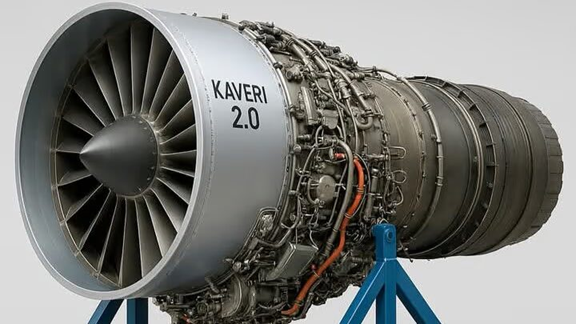
The Kaveri Engine is one of India’s most ambitious and technically challenging defense projects. Developed to power indigenous fighter aircraft, the Kaveri program represents India’s long-standing goal of achieving self-reliance in advanced military aviation technology. Although the engine has faced several hurdles over the years, it remains an important milestone in India’s aerospace journey.
What Is the Kaveri Engine?
The Kaveri Engine is an indigenous turbofan jet engine developed by the Gas Turbine Research Establishment (GTRE), a laboratory under India’s Defence Research and Development Organisation (DRDO). The project began in the late 1980s with the primary aim of powering the Light Combat Aircraft (LCA) Tejas, India’s homegrown fighter jet.
The engine was named “Kaveri” after the Kaveri River, symbolizing strength, endurance, and national pride. It was designed as a low-bypass turbofan engine suitable for high-speed combat aircraft.
Objectives of the Kaveri Engine Program
The Kaveri Engine project was initiated to reduce India’s dependence on foreign jet engine manufacturers. At the time, India relied heavily on imported engines for its fighter aircraft, which posed strategic and operational challenges.
The key objectives of the program included:
-
Developing an indigenous jet engine with modern performance standards
-
Gaining expertise in advanced materials and manufacturing techniques
-
Building a domestic ecosystem for aero-engine development
-
Supporting future fighter aircraft programs
Technical Features of the Kaveri Engine
The Kaveri is a twin-spool, low-bypass turbofan engine designed for supersonic combat aircraft. It incorporates several advanced technologies that were new to India when development began.
Some of its key technical features include:
-
Full Authority Digital Engine Control (FADEC) for precise engine management
-
Advanced high-pressure compressor and turbine design
-
Use of special alloys and materials to withstand extreme temperatures
-
Afterburner capability for increased thrust during combat operations
The engine was designed to produce around 80–90 kN of thrust with afterburner, which was considered adequate for the LCA Tejas during the initial design phase.
Challenges Faced During Development
Despite significant progress, the Kaveri Engine faced multiple technical and operational challenges. One of the main issues was that the engine did not achieve the desired thrust-to-weight ratio required for modern fighter aircraft.
Some of the major challenges included:
-
Insufficient thrust output for the Tejas
-
Weight exceeding original design targets
-
Limited experience in high-temperature metallurgy
-
Difficulties in developing single-crystal turbine blades
-
Delays caused by changing performance requirements
These challenges resulted in the Kaveri being delinked from the Tejas program. As a result, the Tejas currently uses the GE F404 and F414 engines sourced from the United States.
Testing and International Collaboration
The Kaveri Engine underwent extensive testing in India and abroad. It was tested on ground test beds, high-altitude test facilities, and even on a flying test bed aircraft in Russia.
To overcome technological gaps, DRDO also explored international collaboration. Partnerships with foreign aerospace companies helped Indian engineers gain exposure to advanced engine design and manufacturing practices. While these collaborations did not result in immediate operational deployment, they contributed valuable knowledge and experience.
Current Status of the Kaveri Engine
Although the Kaveri Engine was not inducted into the Tejas fighter, the project has not been abandoned. Over the years, DRDO has continued refining the engine’s core technology.
The Kaveri engine core is now being adapted for other applications, including:
-
Unmanned aerial vehicles (UAVs)
-
Marine gas turbine variants
-
Future indigenous fighter aircraft programs
A non-afterburning version of the Kaveri engine has also been considered for use in long-endurance UAVs, where fuel efficiency is more critical than raw thrust.
Importance of the Kaveri Engine for India
Even though the Kaveri Engine did not meet its original goal, it remains a critical learning platform for India’s aerospace sector. Jet engine development is among the most complex engineering challenges in the world, and very few countries possess this capability.
The Kaveri program helped India:
-
Build a skilled workforce in aero-engine technology
-
Develop testing infrastructure for jet engines
-
Gain hands-on experience in advanced propulsion systems
-
Lay the foundation for future engine programs
These achievements will play a crucial role in upcoming indigenous projects, including advanced fighter jets and drone platforms.
Future Prospects
India continues to invest in jet engine development under various initiatives focused on defense self-reliance. Lessons learned from the Kaveri Engine are expected to directly influence future programs, such as engines for next-generation fighter aircraft.
With evolving technology, improved materials, and stronger global partnerships, India’s dream of producing a fully indigenous, world-class jet engine remains alive. The Kaveri Engine stands as a testament to the country’s determination to master one of the most demanding areas of modern engineering.
Conclusion
The Kaveri Engine is more than just a jet engine project—it is a symbol of India’s pursuit of technological independence in defense aviation. While it faced setbacks and did not power the Tejas as originally planned, the knowledge gained through the program has been invaluable. As India moves forward with advanced aerospace ambitions, the Kaveri Engine will always be remembered as a foundational step toward self-reliance in jet propulsion technology.
Engine Oil: Importance, Types, Benefits & Maintenance Guide
Disclaimer

The information provided in this article is for general informational and educational purposes only. While every effort has been made to ensure the accuracy of the content, the author does not guarantee the completeness, reliability, or timeliness of the information. Details related to defense technologies, specifications, and programs may change over time. This content does not represent official statements or views of any government organization, defense agency, or manufacturer. Readers are advised to verify information from official sources before relying on it for decision-making or research purposes.