
As the world looks for cleaner and more sustainable energy solutions, alternative fuels have become a major focus. In India, one such initiative is the introduction of E20 fuel, a blend of petrol and ethanol designed to reduce dependence on imported crude oil while lowering carbon emissions.
The Indian government has been actively promoting ethanol blending as part of its energy security and environmental goals. E20 fuel is expected to play a significant role in the country’s transition toward cleaner transportation without requiring a complete shift to electric vehicles.
What is E20 Fuel?
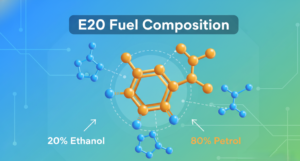
E20 fuel is a blend consisting of:
- 20% Ethanol
- 80% Petrol (Gasoline)
Ethanol is a renewable biofuel produced primarily from agricultural products such as:
- Sugarcane
- Corn (Maize)
- Broken rice
- Wheat
- Other biomass sources
Unlike conventional petrol, ethanol contains oxygen, which helps fuel burn more efficiently and reduces certain harmful emissions.
Why is India Introducing E20 Fuel?
India imports a significant portion of its crude oil requirements, making fuel prices vulnerable to international markets. Increasing ethanol blending offers several advantages:
- Reduces dependence on imported oil
- Supports Indian farmers
- Promotes renewable energy
- Lowers greenhouse gas emissions
- Improves energy security
- Encourages rural economic development
The government’s ethanol blending program aims to increase the use of domestically produced biofuels while creating a cleaner transportation ecosystem.
How Does E20 Fuel Work?
Modern petrol engines can burn a mixture of petrol and ethanol with only minor modifications, depending on the vehicle’s design.
Ethanol mixes uniformly with petrol and enters the engine through the normal fuel system. During combustion:
- Ethanol provides additional oxygen.
- Fuel burns more completely.
- Carbon monoxide emissions decrease.
- Some pollutants are reduced.
The overall driving experience remains similar to regular petrol for vehicles designed to use E20.
Benefits of E20 Fuel
1. Lower Carbon Emissions
One of the biggest advantages of E20 fuel is its environmental benefit.
Because ethanol comes from renewable plant sources, it produces fewer net greenhouse gas emissions than fossil fuels.
Benefits include:
- Reduced carbon dioxide emissions
- Lower carbon monoxide output
- Cleaner exhaust gases
2. Reduced Oil Imports
India spends billions of dollars annually importing crude oil.
Increasing ethanol blending helps:
- Save foreign exchange
- Improve energy independence
- Reduce exposure to global oil price fluctuations
3. Support for Farmers
Ethanol production creates additional demand for agricultural produce.
Farmers growing crops such as:
- Sugarcane
- Maize
- Rice
can benefit from improved market opportunities and diversified income sources.
4. Renewable Fuel Source
Unlike fossil fuels, ethanol can be produced repeatedly through agriculture, making it a renewable energy resource.
This contributes to long-term sustainability.
5. Better Combustion
Since ethanol contains oxygen, it promotes more complete combustion inside the engine.
This may help reduce certain engine deposits over time.
Challenges of E20 Fuel
While E20 offers many advantages, there are also challenges.
Slight Reduction in Fuel Economy
Ethanol contains less energy than petrol.
As a result:
- Mileage may decrease slightly.
- Fuel consumption may increase by a small percentage.
However, the difference is generally modest for E20-compatible vehicles.
Compatibility Issues
Older vehicles may not be designed to handle higher ethanol concentrations.
Potential concerns include:
- Rubber seal degradation
- Fuel line wear
- Corrosion in certain metal components
- Fuel pump compatibility
Manufacturers now design newer vehicles to be compatible with E20 fuel.
Infrastructure Requirements
Fuel stations need:
- Separate storage facilities
- Updated distribution systems
- Quality monitoring
Expanding nationwide E20 availability requires significant investment.
Which Vehicles Can Use E20 Fuel?
Vehicle compatibility depends on the manufacturer’s specifications.
E20-Compatible Vehicles
Many recently launched motorcycles, scooters, and cars are designed to operate safely with E20 fuel.
Automakers have introduced upgraded fuel systems featuring:
- Ethanol-resistant fuel lines
- Improved injectors
- Compatible seals
- Optimized engine calibration
Older Vehicles
Older petrol vehicles may not be fully compatible with E20 fuel.
Owners should:
- Check the owner’s manual.
- Contact the manufacturer.
- Confirm fuel compatibility before regular use.
Using incompatible fuel over extended periods could affect engine components.
Does E20 Affect Engine Performance?
In most E20-compatible vehicles, everyday performance remains nearly identical to standard petrol.
Drivers generally experience:
- Smooth acceleration
- Reliable starting
- Normal drivability
- Stable engine operation
Some engines may even benefit from improved combustion efficiency due to ethanol’s higher octane rating.
E20 Fuel vs Regular Petrol
| Feature | Regular Petrol | E20 Fuel |
|---|---|---|
| Ethanol Content | Low | 20% |
| Renewable Content | Minimal | High |
| Carbon Emissions | Higher | Lower |
| Oil Dependency | High | Reduced |
| Fuel Economy | Slightly Better | Slightly Lower |
| Environmental Impact | Higher | Cleaner |
Environmental Impact of E20 Fuel
Transportation contributes significantly to air pollution and greenhouse gas emissions.
E20 fuel helps by:
- Lowering fossil fuel consumption
- Supporting renewable agriculture
- Reducing carbon emissions
- Encouraging cleaner combustion
Although it is not a zero-emission solution like electric vehicles, E20 represents an important step toward greener mobility.
Is E20 Fuel Safe?
Yes. When used in vehicles approved by the manufacturer, E20 fuel is considered safe.
Vehicle manufacturers conduct extensive testing to ensure:
- Engine durability
- Fuel system reliability
- Emission compliance
- Long-term performance
Consumers should always follow the fuel recommendations provided by their vehicle manufacturer.
Will E20 Fuel Replace Petrol Completely?
No.
E20 is still primarily petrol, with ethanol making up 20% of the blend.
India’s transportation sector is expected to use a mix of technologies in the coming years, including:
- Ethanol-blended petrol
- Compressed Natural Gas (CNG)
- Electric vehicles (EVs)
- Hybrid vehicles
- Hydrogen-based mobility in the future
E20 serves as a practical transition fuel that can reduce emissions using existing internal combustion engines.
Tips for Vehicle Owners
If you plan to use E20 fuel:
- Verify your vehicle’s compatibility.
- Follow the maintenance schedule recommended by the manufacturer.
- Replace worn fuel system components when necessary.
- Purchase fuel from reputable filling stations.
- Monitor fuel economy after switching.
Proper maintenance helps ensure optimal engine performance regardless of the fuel blend.
The Future of E20 Fuel in India
India’s ethanol blending initiative is expected to expand in the coming years as fuel infrastructure improves and more compatible vehicles enter the market. Automobile manufacturers are increasingly producing engines designed for higher ethanol blends, while investments in biofuel production continue to grow.
As awareness increases, E20 fuel could become the standard petrol option across much of the country. Alongside electric mobility and other clean-energy technologies, ethanol-blended fuel will likely remain an important part of India’s strategy to reduce emissions, strengthen energy security, and support sustainable economic growth.
Conclusion
E20 fuel is an important milestone in India’s journey toward cleaner and more sustainable transportation. By blending 20% ethanol with petrol, it helps reduce dependence on imported oil, supports the agricultural sector, and lowers harmful emissions. While there may be a slight reduction in fuel economy and compatibility concerns for some older vehicles, modern E20-ready vehicles are designed to use this fuel safely and efficiently.
For consumers, understanding whether their vehicle supports E20 fuel is the first step before making the switch. As infrastructure expands and awareness grows, E20 is expected to become a key component of India’s future fuel landscape, offering a practical balance between environmental responsibility and everyday convenience.
Disclaimer: This article is for informational purposes only. Fuel compatibility varies by vehicle model and manufacturer. Always refer to your vehicle’s owner’s manual or consult the manufacturer before using E20 fuel in your vehicle.