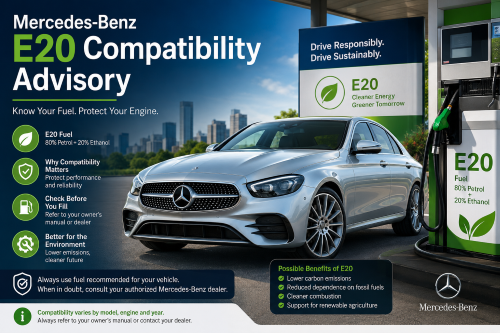
As countries around the world increase the use of ethanol-blended fuels to reduce carbon emissions and dependence on fossil fuels, vehicle manufacturers are updating fuel compatibility information for their customers. One such development is the Mercedes-Benz E20 compatibility advisory, which helps owners understand whether their vehicles can safely use gasoline blended with up to 20% ethanol (E20).
If you own a Mercedes-Benz or are planning to buy one, understanding fuel compatibility is essential. Using the wrong fuel blend may affect engine performance, fuel efficiency, and long-term reliability. This guide explains what E20 fuel is, why compatibility matters, and how Mercedes-Benz owners can make informed decisions.
What Is E20 Fuel?
E20 is a gasoline blend containing:
- 80% petrol (gasoline)
- 20% ethanol
Ethanol is a renewable biofuel typically produced from crops such as sugarcane, corn, or other plant-based sources. Governments encourage ethanol blending to reduce greenhouse gas emissions and lower dependence on imported crude oil.
E20 is part of a broader transition toward cleaner transportation fuels in many countries, including India, Brazil, and several regions worldwide.
Why Is Mercedes-Benz Issuing an E20 Compatibility Advisory?
Modern Mercedes-Benz vehicles are engineered with advanced fuel systems and precision engines. However, not every model is designed to handle higher ethanol concentrations.
An E20 compatibility advisory helps owners understand:
- Whether their vehicle supports E20 fuel.
- Which model years are compatible.
- Any precautions required before using E20.
- Potential effects on performance and maintenance.
These advisories are especially important during periods when fuel stations begin offering higher ethanol blends.
Why Fuel Compatibility Matters
Ethanol has different chemical properties than conventional gasoline.
Some key differences include:
- Higher oxygen content
- Different combustion characteristics
- Increased water absorption
- Greater potential for corrosion in incompatible fuel systems
If an engine or fuel system isn’t designed for E20, long-term use may lead to:
- Fuel hose deterioration
- Seal damage
- Injector issues
- Reduced fuel economy
- Starting difficulties
- Increased maintenance costs
This is why manufacturers carefully evaluate compatibility before approving higher ethanol blends.
Potential Benefits of E20 Fuel
When used in compatible vehicles, E20 offers several advantages.
1. Lower Carbon Emissions
Ethanol is produced from renewable agricultural sources, helping reduce net carbon emissions compared to conventional gasoline.
2. Reduced Dependence on Fossil Fuels
Many countries use ethanol blending to decrease crude oil imports and improve energy security.
3. Cleaner Combustion
Ethanol contains oxygen, which can promote cleaner combustion under certain operating conditions.
4. Support for Renewable Agriculture
Higher ethanol demand often benefits agricultural industries involved in biofuel production.
Possible Challenges of E20 Fuel
Although E20 has environmental benefits, it also presents certain challenges.
Slightly Lower Fuel Economy
Ethanol contains less energy per litre than gasoline. Some drivers may notice a small reduction in fuel economy.
Material Compatibility
Older vehicles may have:
- Rubber components
- Fuel seals
- Plastic parts
that were not designed for prolonged exposure to higher ethanol concentrations.
Cold Weather Performance
Higher ethanol blends may affect cold-start performance in certain climates, although modern engine management systems generally compensate effectively.
Which Mercedes-Benz Vehicles May Support E20?
Compatibility depends on several factors, including:
- Vehicle model
- Engine type
- Production year
- Market specification
- Fuel system design
Newer Mercedes-Benz models often feature improved materials and engine management systems that better accommodate higher ethanol blends. However, compatibility varies by region because fuel regulations differ worldwide.
Owners should never assume compatibility based solely on the vehicle’s age.
How to Check If Your Mercedes-Benz Supports E20
The safest approach is to verify compatibility using official sources.
You can:
Check the Owner’s Manual
The owner’s manual usually lists approved fuel specifications.
Contact an Authorized Dealer
Dealership service departments can verify compatibility using your vehicle identification number (VIN).
Review Official Service Bulletins
Manufacturers periodically release updated compatibility information as fuel standards evolve.
Use the Fuel Cap Label
Some vehicles include fuel compatibility information near the fuel filler cap.
What Happens If You Accidentally Fill E20?
If your Mercedes-Benz is not officially approved for E20, a single accidental fill is unlikely to cause immediate engine failure.
However:
- Avoid repeated use.
- Refill with the recommended fuel at the earliest opportunity.
- Monitor for warning lights or unusual engine behaviour.
- Contact an authorized Mercedes-Benz service center if you notice performance issues.
Long-term use of incompatible fuel poses a greater risk than one isolated refueling event.
Can Older Mercedes-Benz Models Use E20?
Older vehicles generally require additional caution.
Vehicles manufactured before widespread ethanol adoption may include components that are more susceptible to ethanol-related wear.
Potential concerns include:
- Fuel line degradation
- Seal deterioration
- Fuel pump wear
- Corrosion within the fuel system
Owners of classic Mercedes-Benz vehicles should always follow manufacturer recommendations before using higher ethanol blends.
Maintenance Tips for E20-Compatible Vehicles
If your Mercedes-Benz is approved for E20, good maintenance practices can help ensure reliable operation.
Use High-Quality Fuel
Purchase fuel from reputable service stations with proper quality controls.
Follow Scheduled Maintenance
Regular servicing helps identify fuel system issues before they become serious.
Replace Fuel Filters on Time
Clean fuel filters support proper injector performance.
Watch for Warning Signs
Seek professional inspection if you notice:
- Rough idling
- Reduced power
- Difficulty starting
- Poor fuel economy
- Engine warning lights
Common Myths About E20 Fuel
Myth 1: E20 Damages Every Engine
False.
Only vehicles that are not designed or approved for E20 may experience compatibility issues over time.
Myth 2: Higher Ethanol Always Improves Performance
Not necessarily.
Performance depends on engine calibration and fuel system design.
Myth 3: All Modern Cars Automatically Support E20
Incorrect.
Fuel compatibility differs between manufacturers, regions, and model years.
Myth 4: Ethanol Is Harmful in Any Amount
False.
Most modern gasoline vehicles already operate safely on lower ethanol blends such as E10, provided they meet manufacturer specifications.
Environmental Impact of E20
Many governments promote E20 as part of broader sustainability initiatives.
Potential environmental benefits include:
- Lower lifecycle greenhouse gas emissions
- Reduced fossil fuel consumption
- Increased use of renewable resources
- Support for national clean-energy goals
However, environmental outcomes also depend on how ethanol is produced, transported, and blended.
Best Practices for Mercedes-Benz Owners
To protect your vehicle:
- Always follow the fuel recommendation in the owner’s manual.
- Confirm E20 compatibility before switching fuels.
- Refuel at trusted fuel stations.
- Keep up with scheduled maintenance.
- Avoid aftermarket fuel additives unless specifically recommended by Mercedes-Benz.
- Consult an authorized service center if you are unsure about fuel compatibility.
These simple steps can help maintain engine performance and reduce the risk of unnecessary repairs.
Conclusion
The Mercedes-Benz E20 compatibility advisory is an important resource for owners as ethanol-blended fuels become more widely available. While E20 offers environmental and energy-security benefits, it is essential to use only the fuel types approved for your specific vehicle.
Compatibility varies by model, engine, production year, and regional specifications. Before using E20 fuel, check your owner’s manual or consult an authorized Mercedes-Benz dealer to confirm that your vehicle is designed to operate safely with a 20% ethanol blend.
By following official recommendations and maintaining your vehicle properly, you can enjoy reliable performance while supporting cleaner and more sustainable transportation.
Disclaimer: This article is for general informational purposes only. Vehicle fuel compatibility may vary depending on model, model year, engine configuration, and regional specifications. Always refer to your Mercedes-Benz owner’s manual or consult an authorized Mercedes-Benz service center for the latest official fuel compatibility guidance before using E20 fuel.