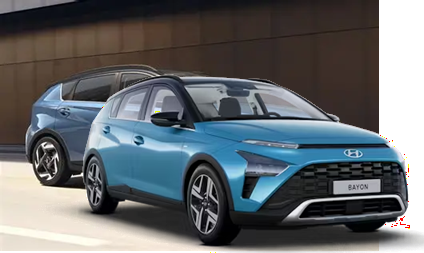
The automotive world is rapidly shifting toward compact SUVs that combine practicality, modern design, and advanced technology. Hyundai has been one of the leading brands in this transformation, and its upcoming next-generation Hyundai Bayon is expected to strengthen its position in the global subcompact SUV segment. The new Bayon is not just a facelift or minor update—it is being developed as a significantly upgraded model with improved design, space, performance, and technology.
A New Direction for the Hyundai Bayon
The current Hyundai Bayon is known as a compact crossover positioned below models like the Kona in Hyundai’s global lineup. However, the next-generation model (internally referred to as BC4) is expected to move away from its hatchback-based roots and evolve into a more “true SUV” character.
According to industry reports and spy shots, the new Bayon is expected to feature a larger body, a more upright stance, and a stronger road presence compared to the outgoing version. This change is important because modern SUV buyers prefer bold, muscular designs rather than car-like crossover proportions.
The new design direction is also expected to align with Hyundai’s latest global styling language, which emphasizes sharp lines, clean surfaces, and futuristic lighting signatures.
Exterior Design: Bigger, Bolder, and More Modern
One of the most noticeable updates in the next-generation Bayon will be its exterior styling. Hyundai is expected to redesign nearly every part of the vehicle’s bodywork.
Key expected design highlights include:
- A more upright and boxy SUV silhouette
- Slimmer LED headlights with integrated daytime running lights
- A wider and more dominant front grille
- A redesigned bumper with a more rugged appearance
- Stronger shoulder lines for improved road presence
- Redesigned rear with updated LED tail lamps
Spy reports suggest that the new Bayon will appear significantly larger than the current model. The increase in size is not just for aesthetics but also for improving cabin space and practicality.
Bigger Dimensions and Better Space
One of the biggest improvements in the next-generation Hyundai Bayon is expected to be its size. The new model is likely to feature a longer wheelbase and wider stance, which will directly improve interior comfort.
This upgrade is important because compact SUV buyers today demand more legroom, better headroom, and increased luggage capacity—even in smaller vehicles. Hyundai is responding to this demand by making the Bayon more spacious and practical.
The increased dimensions will likely position the new Bayon closer to segment leaders, making it more competitive against rivals in the subcompact SUV category.
Interior: A Major Technology Upgrade
The interior of the next-generation Hyundai Bayon is expected to receive a complete redesign. The current model already offers decent technology, but the upcoming version will likely bring it closer to Hyundai’s latest global models.
Expected interior features include:
- Fully digital instrument cluster
- Larger touchscreen infotainment system
- Dual-screen integrated cockpit design
- Improved ambient lighting system
- Higher-quality materials and soft-touch surfaces
- Enhanced cabin insulation for better comfort
Hyundai is also expected to improve ergonomics, making the dashboard more driver-focused and modern. The infotainment system is likely to support wireless smartphone connectivity, over-the-air updates, and Hyundai’s connected car platform.
Advanced Safety and Driver Assistance
Safety is becoming a key deciding factor for car buyers worldwide, and Hyundai is expected to equip the next-generation Bayon with a strong set of safety technologies.
The new model is likely to include Hyundai SmartSense features such as:
- Forward collision avoidance assist
- Lane-keeping assist
- Blind-spot monitoring system
- Adaptive cruise control
- Rear cross-traffic alert
- Multiple airbags and improved crash structure
These systems will help the Bayon compete with newer rivals that are already offering advanced driver assistance systems (ADAS) in this segment.
Engine and Performance Expectations
While Hyundai has not officially confirmed the full engine lineup, the next-generation Bayon is expected to continue using efficient small-capacity petrol engines with turbocharging options.
Based on current industry reports, expected powertrains may include:
- 1.0-litre turbocharged petrol engine (improved version)
- Mild-hybrid technology for better fuel efficiency
- Possible full hybrid variant in the future
Transmission options are likely to include a 6-speed manual and a 7-speed dual-clutch automatic gearbox.
The focus of the Bayon will remain on fuel efficiency, smooth urban driving, and low emissions rather than high performance. However, the hybrid option could significantly improve fuel economy and reduce running costs.
Driving Experience and Platform Improvements
The next-generation Hyundai Bayon is expected to be built on an updated platform that improves driving dynamics and comfort. The suspension system may be tuned for better ride quality, especially for city driving and highway stability.
Steering response and handling are also expected to be improved, making the vehicle more enjoyable for daily commuting as well as longer journeys.
Market Position and Competition
The new Bayon will compete in one of the most competitive automotive segments in the world. It is expected to rival models such as:
- Renault Captur
- Toyota Yaris Cross
- Kia Stonic
- Nissan Juke (in some markets)
In certain regions like India, reports suggest that the Bayon could be positioned above the Hyundai Venue if launched, offering a more premium compact SUV option.
Expected Launch Timeline
Although Hyundai has not officially confirmed the launch date, the next-generation Bayon is widely expected to debut globally in late 2026, with market rollouts starting soon after.
Europe and Korea are likely to be the first markets, followed by other regions depending on demand and production strategy.
Conclusion
The next-generation Hyundai Bayon represents a significant evolution in Hyundai’s compact SUV strategy. With a larger body, improved interior space, modern digital cockpit, advanced safety systems, and potential hybrid powertrains, the new Bayon is being designed to meet the demands of today’s SUV buyers.
Rather than being just a minor update, it appears to be a complete transformation aimed at making the Bayon more competitive in a rapidly changing automotive market. If Hyundai successfully delivers on these expectations, the next-generation Bayon could become one of the most important compact SUVs in its class.